
How to Tan Sheep Hides at Home & Use the Whole Animal: A Smallholder Story
Nothing Goes to Waste: A Smallholder Story with Sue
One of the greatest privileges of running Green Fields Home Kill & Butchery is meeting smallholders who truly live by the principle of using everything — not just for food, but for animals, wildlife, and the land itself.
Sue is one of those people.
From bees to birds, sheep to geese, fruit trees to herb beds, everything on Sue and John’s smallholding has purpose, care, and thought behind it. Nothing is rushed, nothing is wasted, and everything is done with intention.
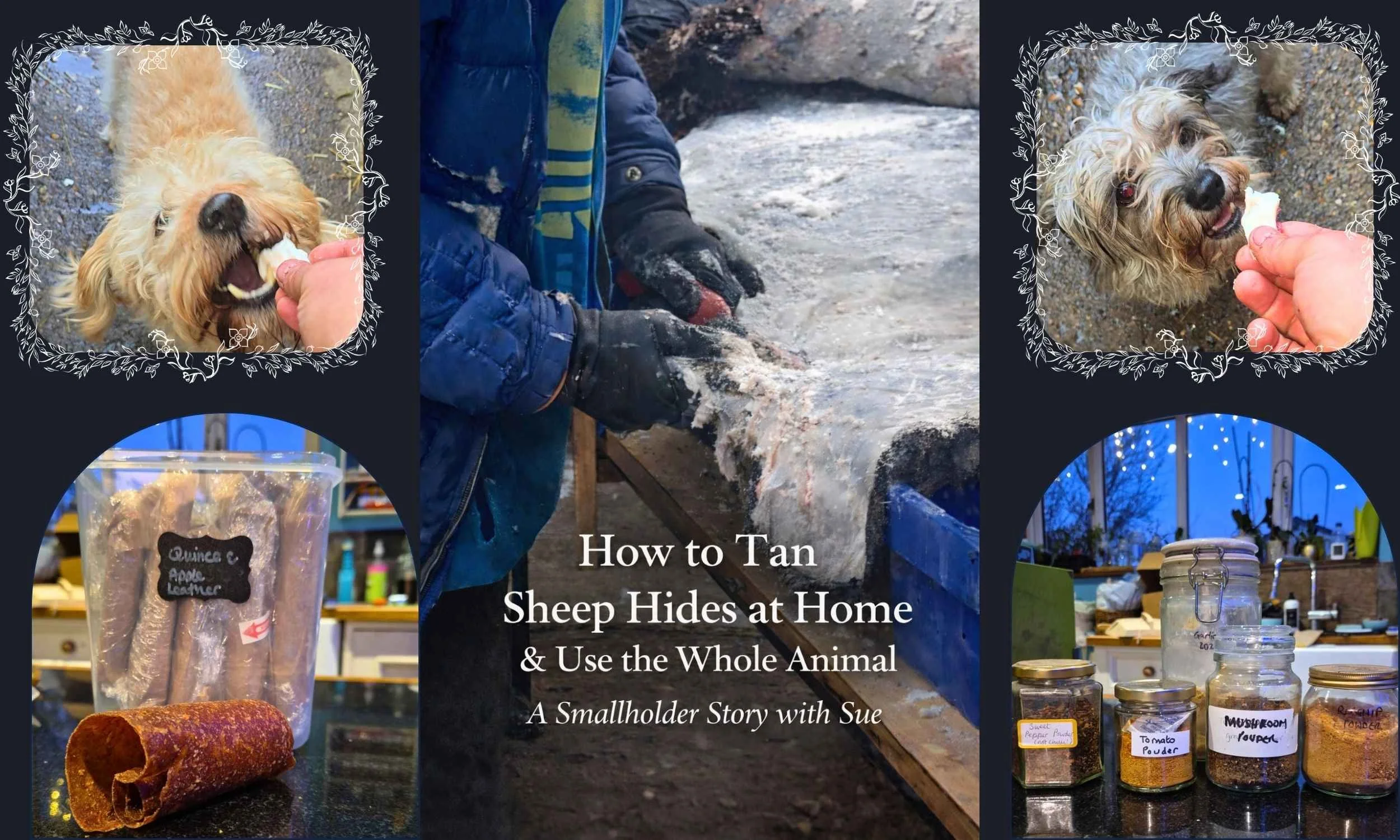
After a sheep home kill carried out by Richard, Sue and John welcomed us back for a cuppa and homemade mince pies and generously shared her knowledge, experience, and photos from her smallholding. This is their story.
Caring for Bees, Not Just Taking Honey 🐝
Sue and her family keep bees, and their approach is centred on the bees themselves rather than maximum honey yield. They deliberately leave enough of the bees’ own honey to last them through the winter seasons, ensuring the colonies have natural food to survive on.
This is a very different approach from taking all the honey and substituting it with feed, or leaving the bees with nothing of their own stores. The priority is always that the bees have what they need first.
In early autumn, the hives are treated for mites that can otherwise devastate colonies, and after winter, strong hives may be split to keep colonies healthy and resilient.
Preserving Eggs for Winter 🥚
Sue keeps geese as well as chickens, and when egg production slows over winter, nothing is wasted.
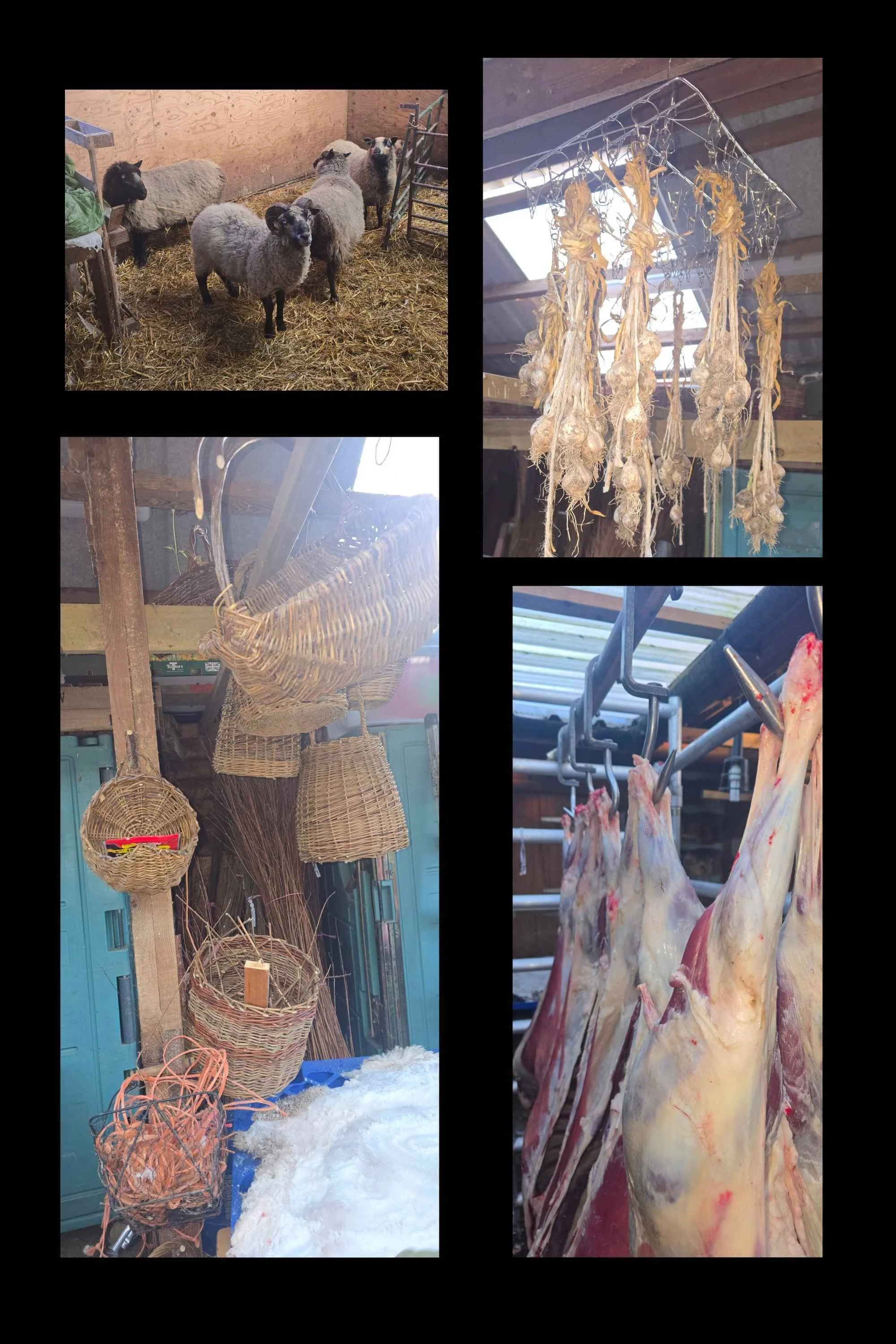
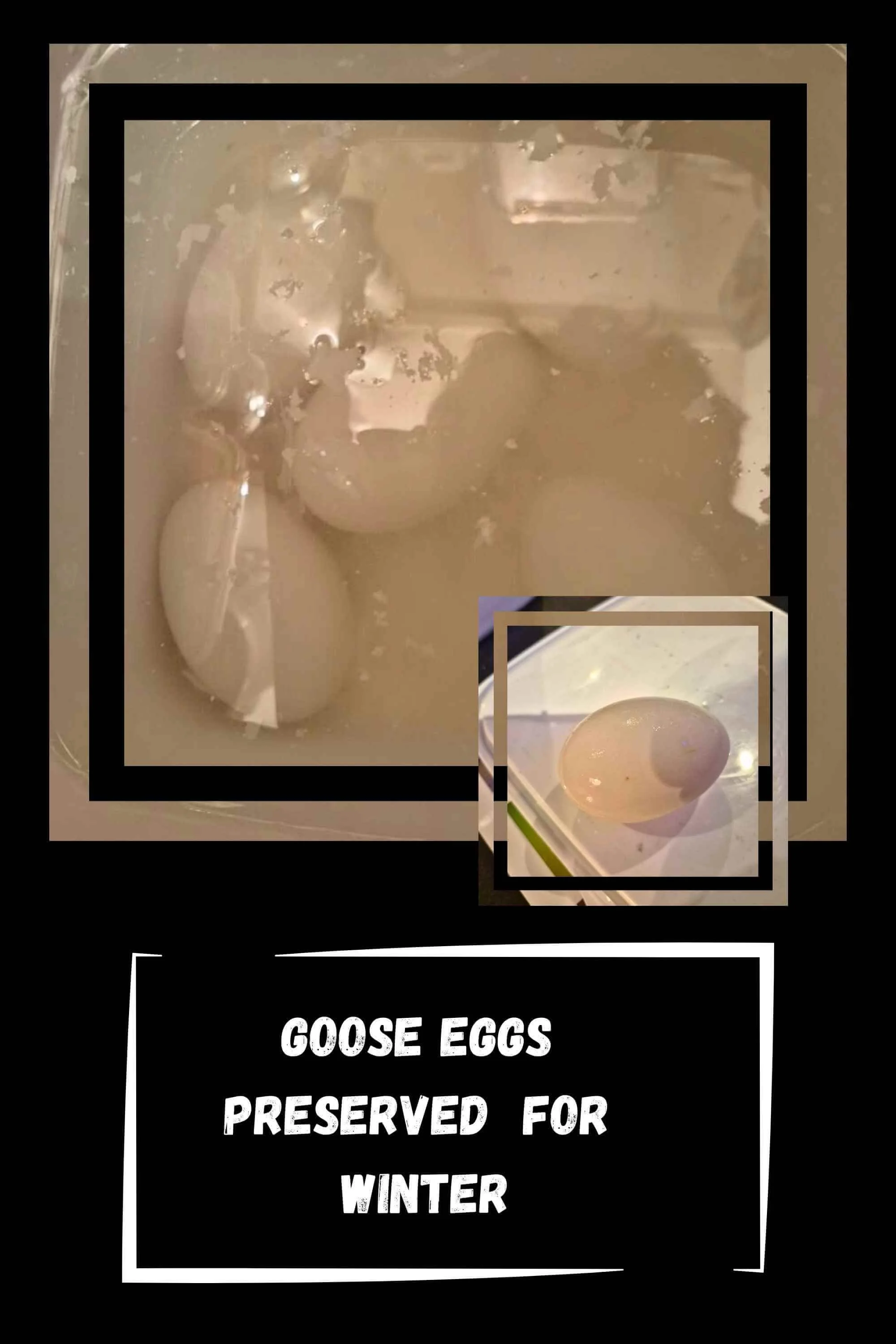
Clean eggs — not washed, but naturally clean — are preserved whole in their shells using a food-grade calcium hydroxide solution. Stored correctly, this traditional method allows eggs to be used months later, providing a valuable food source long after laying has slowed.
It’s a practical, time-tested approach that fits perfectly with smallholder life.
From Sheep to Dog Treats 🐕
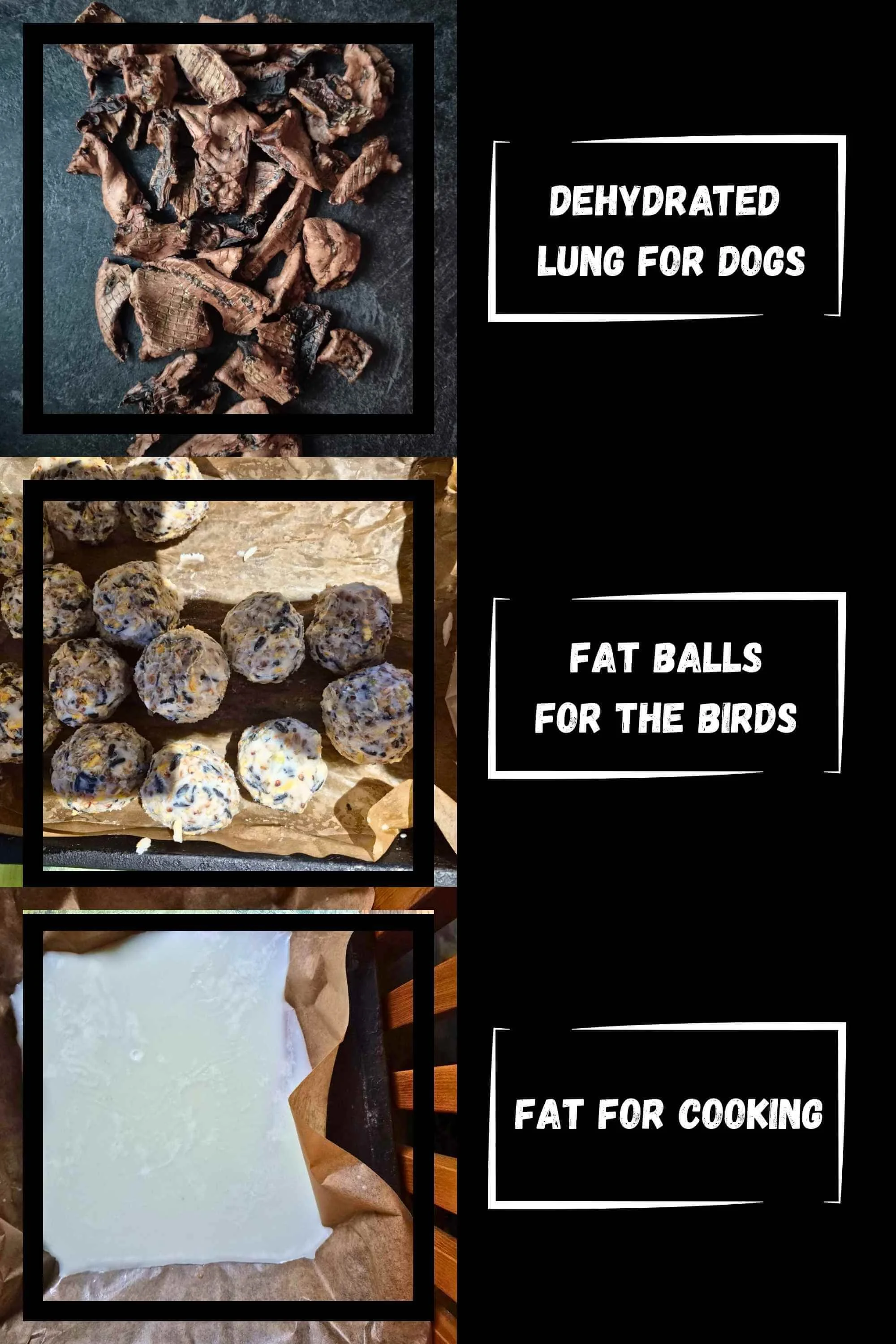
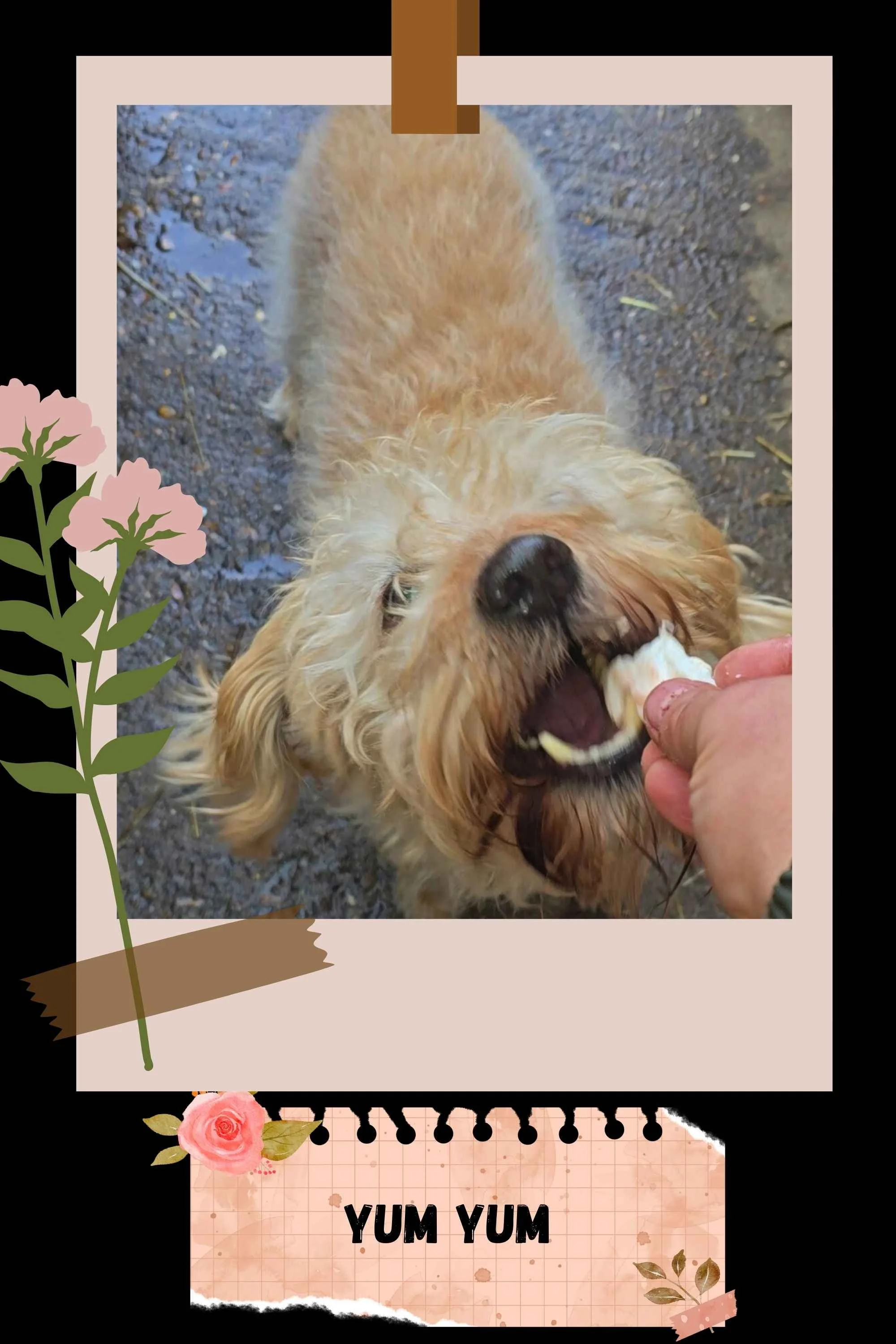
When sheep are home killed, even the lungs are put to good use. Sue dehydrates them to make natural dog treats, free from additives and preservatives.
During our visit, her dogs were very much part of the process — happily enjoying scraps and demonstrating first-hand how nothing on the smallholding goes to waste.
Fruit, Herbs, and Homegrown Flavour 🍎🌿
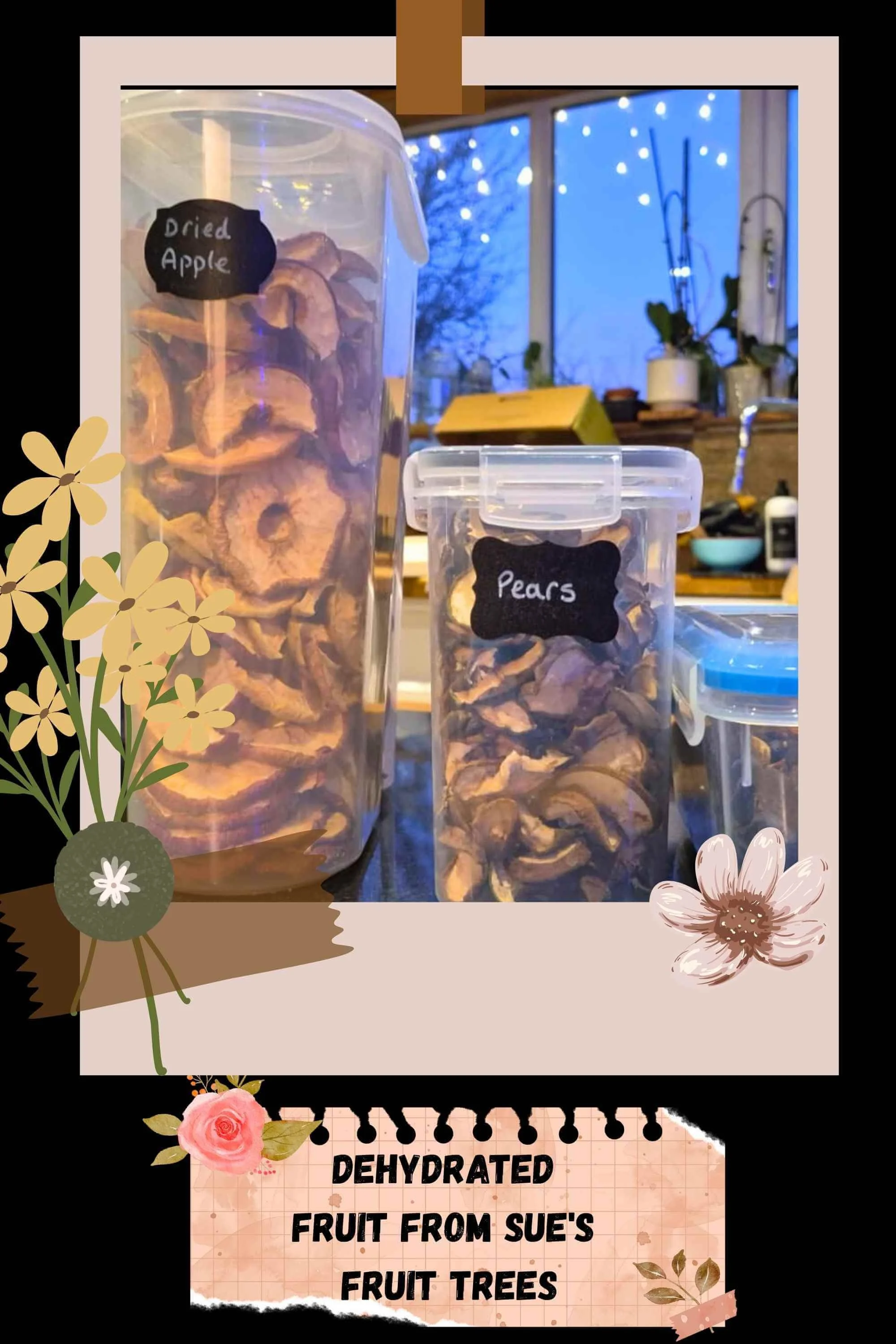
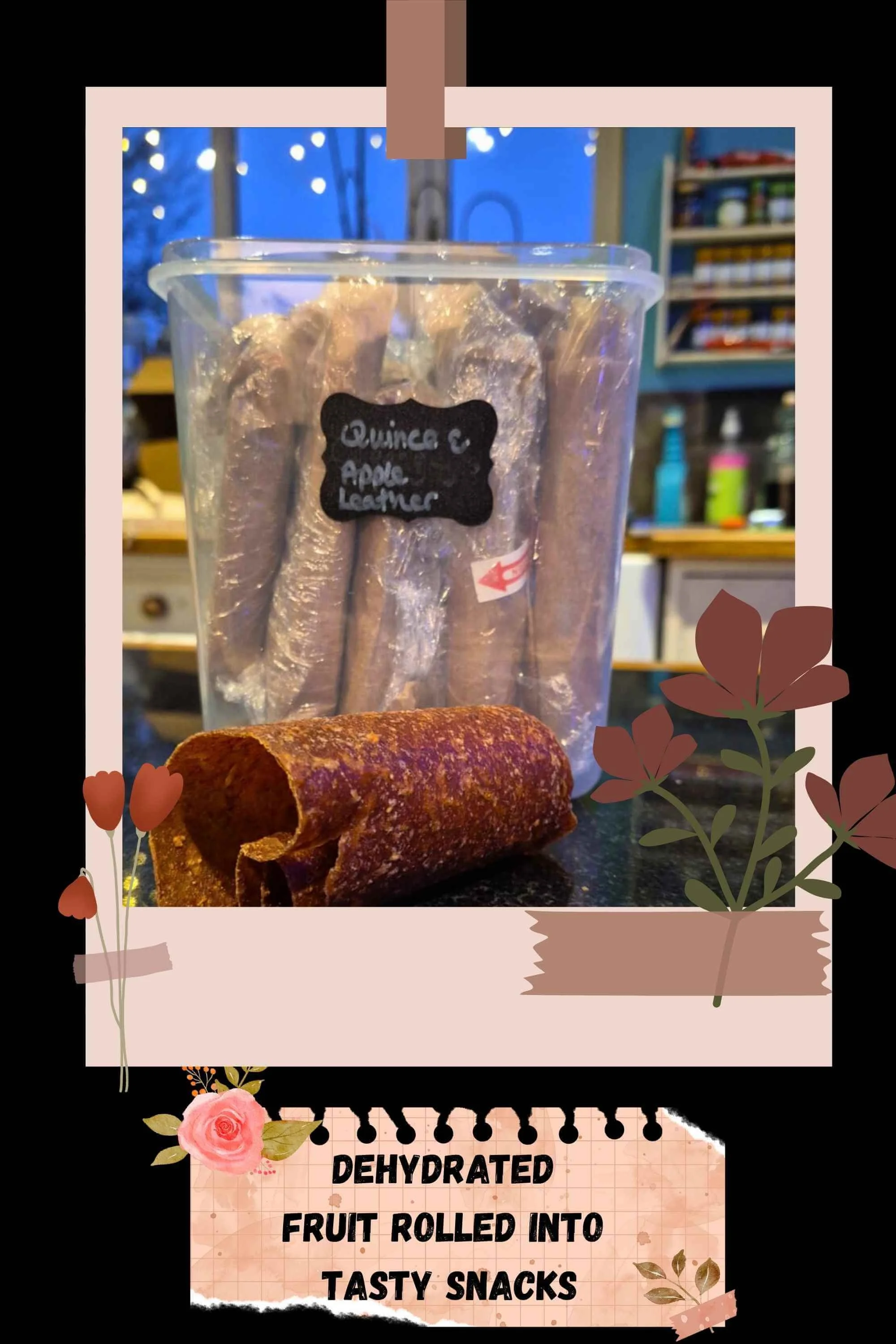
Fruit from the smallholding — including apples and pears — is dehydrated and stored in jars with silica pouches to keep it dry and usable throughout the year.
Some of that fruit even found its way into the most wonderful homemade mince pies Sue kindly gave us, a perfect reminder of how smallholding food connects seasons together.
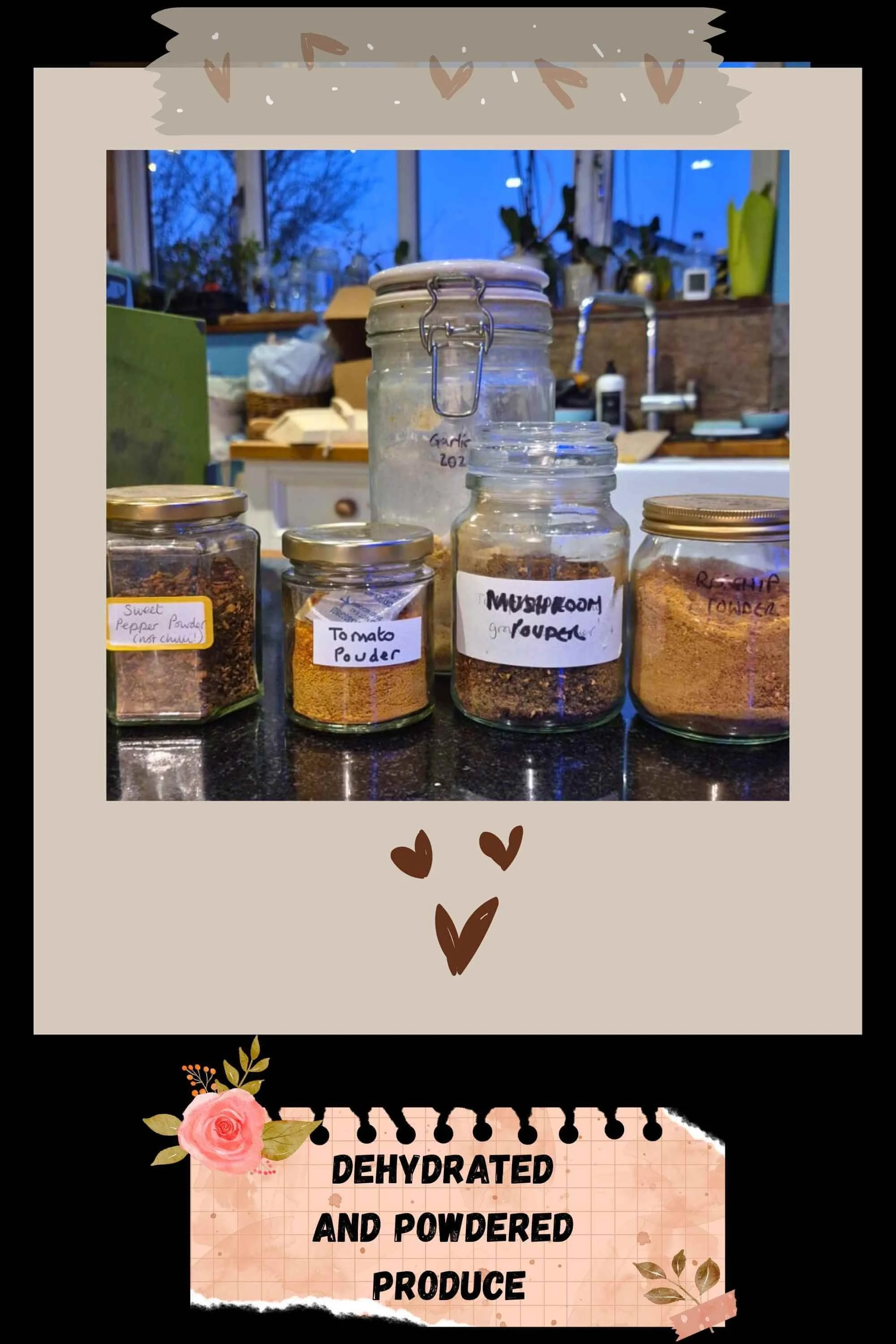
Herbs are also dehydrated and powdered, including tomato powder for soups and sauces. Garlic is grown, dried, and ground into powder, ready to use whenever it’s needed.
Passing Skills On: Basket Weaving with John 🧺
Alongside everything else on the smallholding, Sue’s partner John is a skilled basket weaver. Using traditional techniques, he creates beautiful, practical baskets and also runs courses to teach others the craft.
By sharing his knowledge and teaching people how to weave for themselves, John helps keep these traditional skills alive. It’s another reflection of their smallholding values — learning skills properly, making things that last, and passing knowledge on rather than letting it disappear.
Rendering Sheep Fat for Food and Wildlife 🐑
Sheep fat is carefully rendered by cooking it slowly on a low heat with a little water for around eight hours on the stove. The result is a clean, versatile cooking fat used in the kitchen — including for traditional roast potatoes.
Some of the rendered fat is also made into fat balls for the birds, helping to support local wildlife through the colder months.
About Sue
Sue is a smallholder who shared her approach to using the whole animal with us over a cuppa and homemade mince pies, following a sheep home kill carried out by Richard.
The hide tanning method shared in this blog is written in Sue’s own words, based on her hands-on experience, and the images used throughout were kindly provided by Sue from her smallholding. If you have an questions we are happy to ask her advice.
Tanning Sheep Hides ♻️
Sue shares her method:
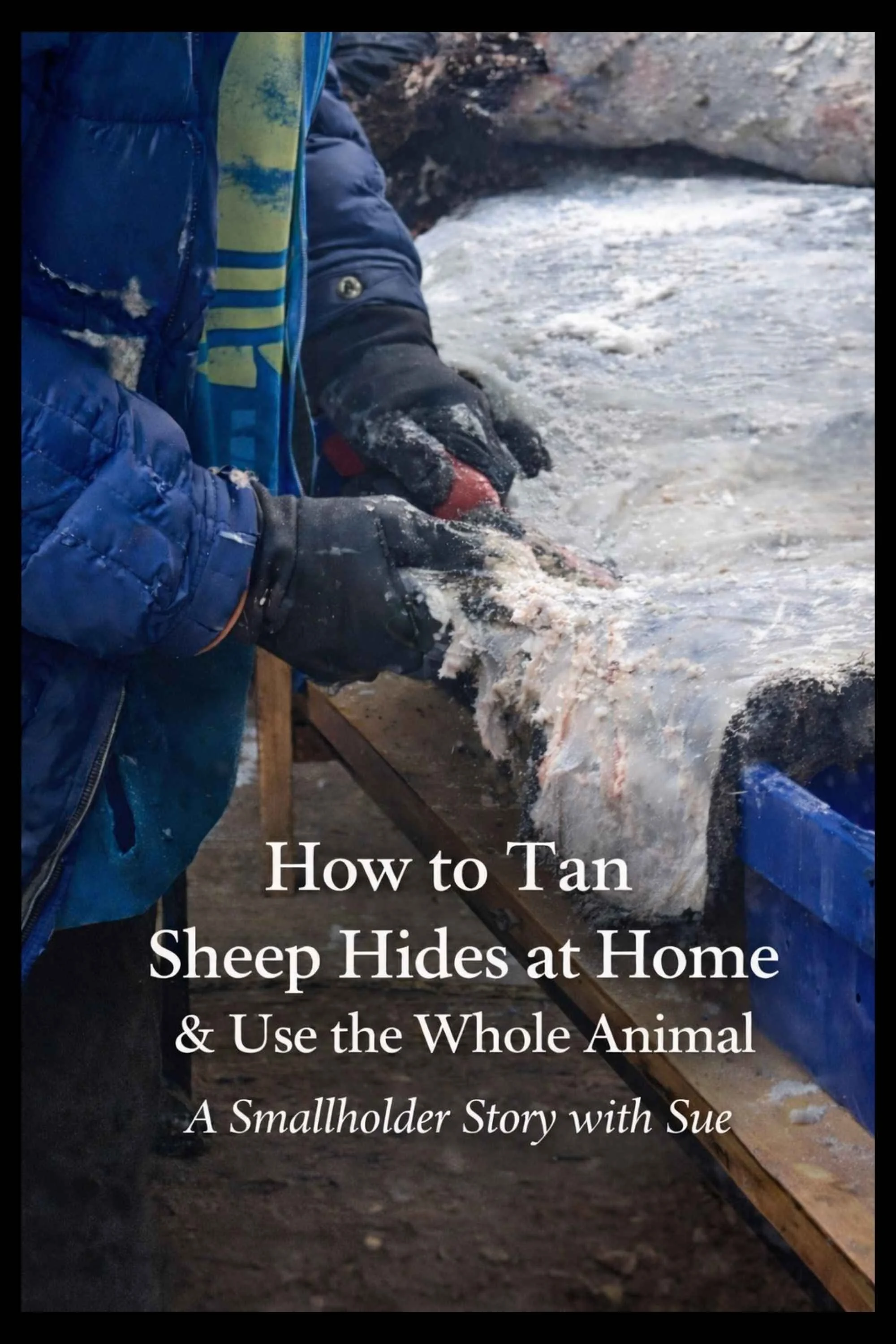
Sue tans her sheep hides herself, beginning the process immediately during home kill. This allows the hides to be preserved and used rather than discarded.
Step 1: Salting the Hide
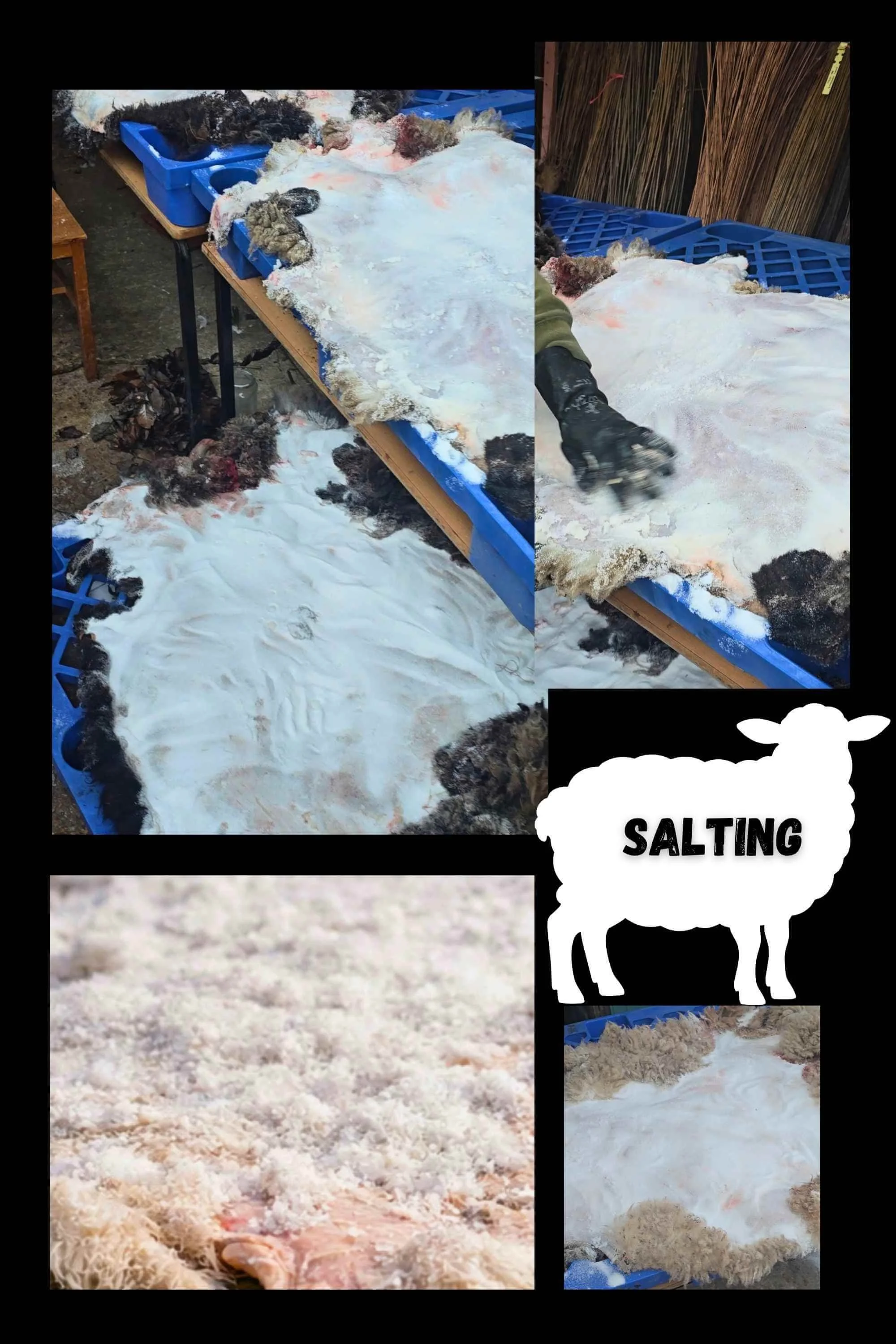
Once the sheep is skinned, salt the hide as soon as possible with a thick layer of salt. This stops the wool from slipping.
Leave the hide to dry for 24–48 hours, making sure the salt is worked into all the nooks and crannies, especially around the legs and tail.
Step 2: Fleshing
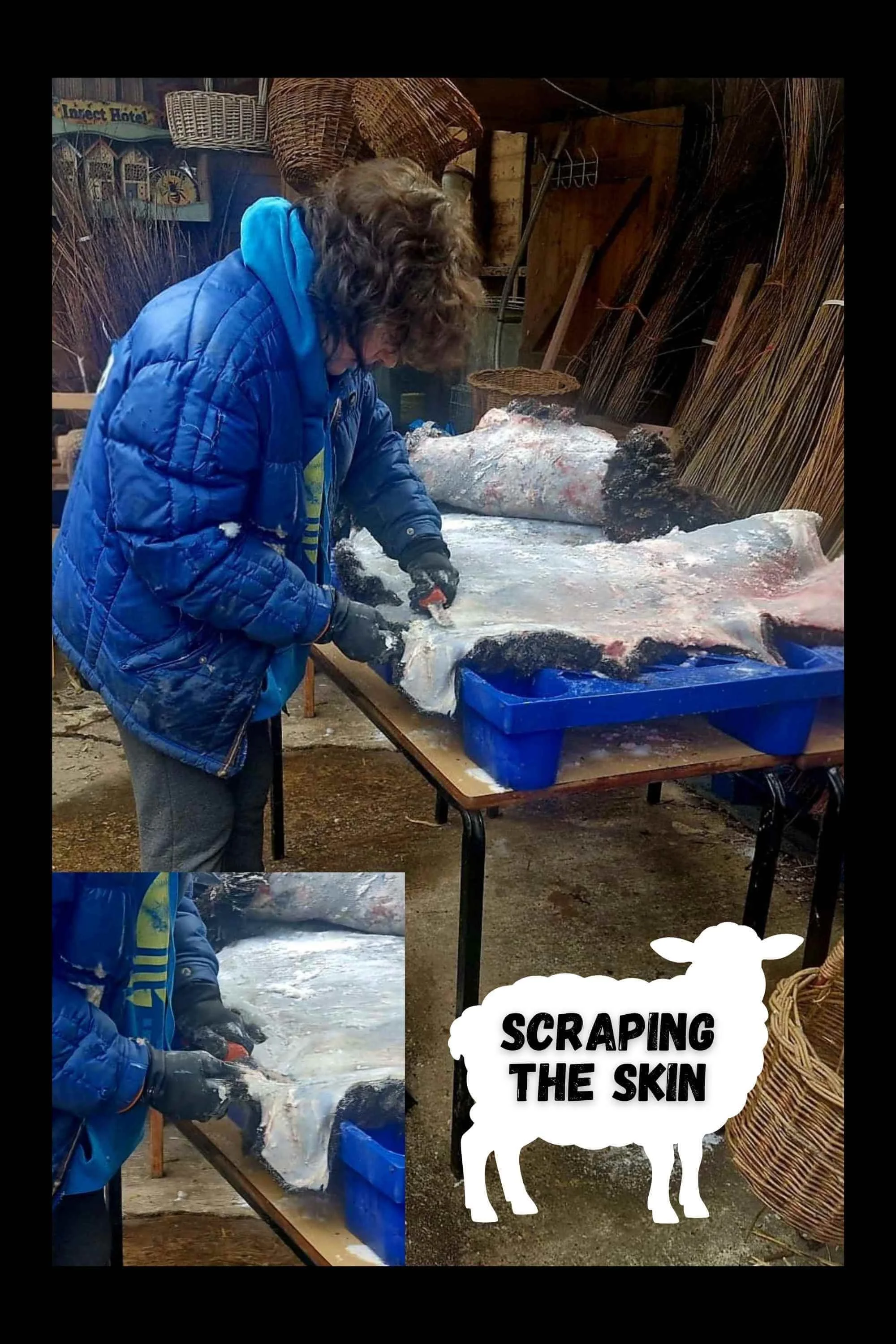
Remove any remaining pieces of meat and fat from the hide using a very sharp knife. This step is essential, as leftover flesh can rot and prevent the tanning process from working properly.
Step 3: Initial Soak
Soak the hide in cold water for at least an hour to remove blood, dirt, and salt. I use a water butt outside for this step.
Step 4: Rinsing
Rinse the hide in fresh cold water until all remaining blood is removed.
Step 5: Washing the Fleece
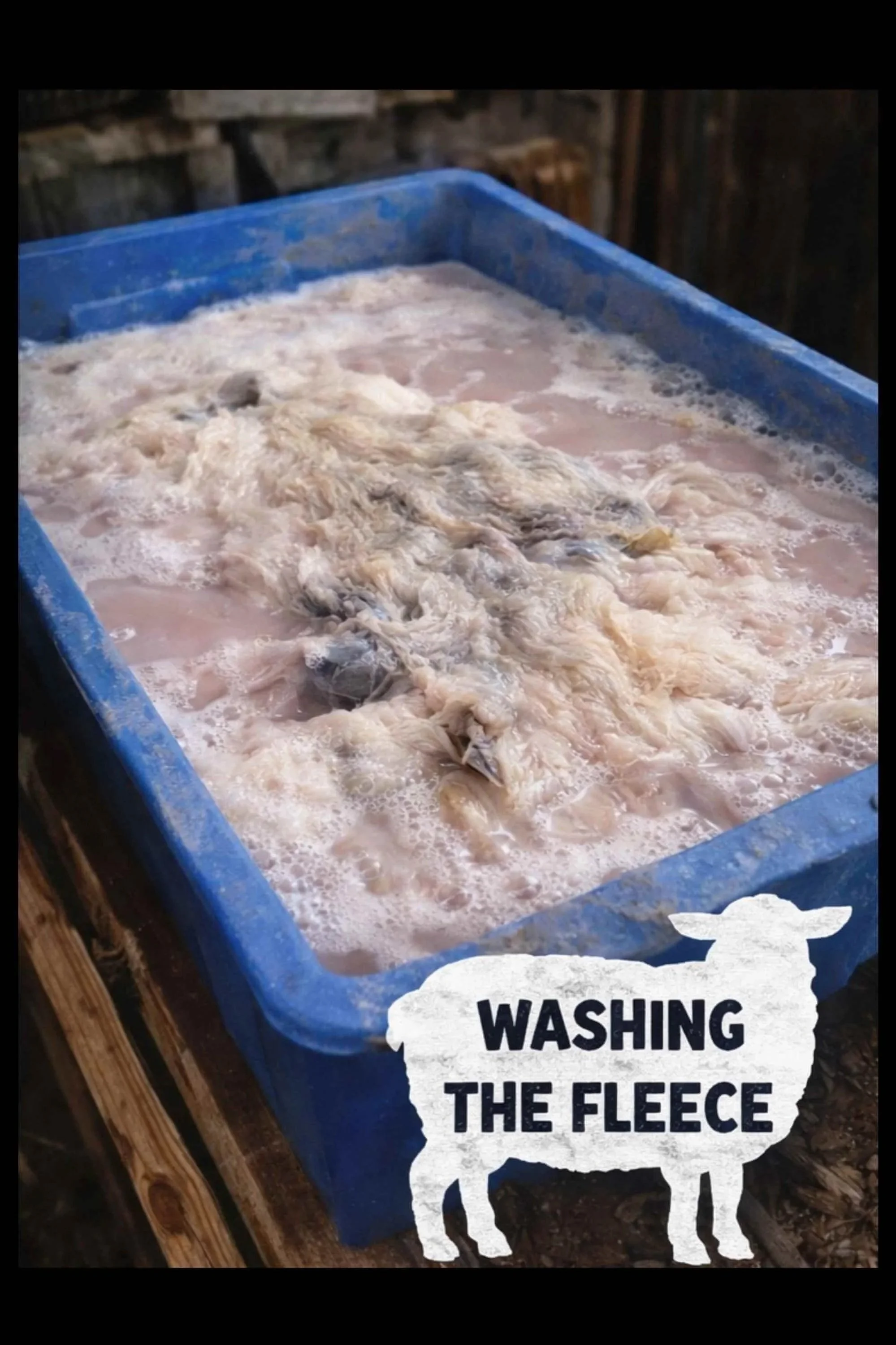
Gradually increase the water temperature to hand-hot, then add washing powder to the fleece side. On this occasion, I also added Vanish, which helped remove stubborn dirt.
Step 6: Deep Clean
Clean the fleece and rinse in warm water. Add more soap powder and clean again, as Shetland fleece contains a lot of lanolin. Rinse thoroughly in warm water until all dirt and soap are removed.
Step 7: Pickling the Skin
Pickle the skin using a kit such as K-Tan, available on Amazon or eBay. This kit contains all the necessary chemicals in powder form.
Mix the pickle solution with warm water and paint it onto the skin side only. Fold the hide skin-to-skin and leave for 24 hours. The pickle prepares the skin to accept the tan.
Step 8: Tanning
Mix the tanning solution with warm water and paint it onto the skin side. Fold skin-to-skin and leave for 2 hours.
Apply a second coat of tan, fold again, and leave for 24 hours.
Avoid getting the tanning solution on the wool, as it will stain it.
Step 9: Checking Penetration
Cut a small piece from the neck end of the hide to check whether the tan has fully penetrated. This is easy to see because the tan is blue.
If the tan has gone all the way through, rinse the hide in cold water.
If not, apply a third coat of tan and leave for another 24 hours, then check again.
Step 10: Neutralising
Neutralise the hide by mixing the third powder from the kit with warm water and painting it onto the skin. Fold the hide and leave for 24 hours.
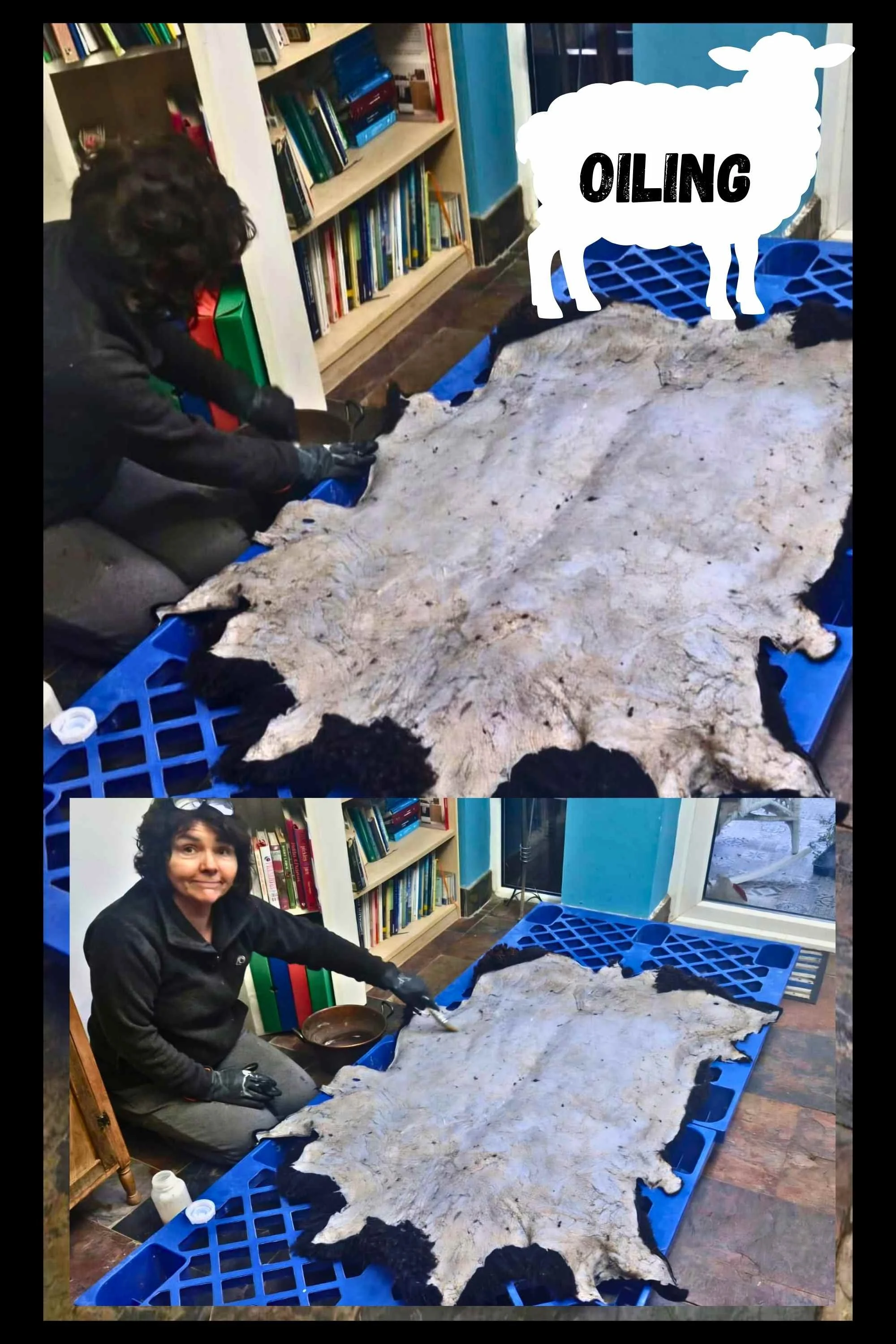
Step 11: Oiling
Mix the oil supplied with the kit in warm water and paint it onto the skin side, avoiding the wool. Fold and leave for 24 hours.
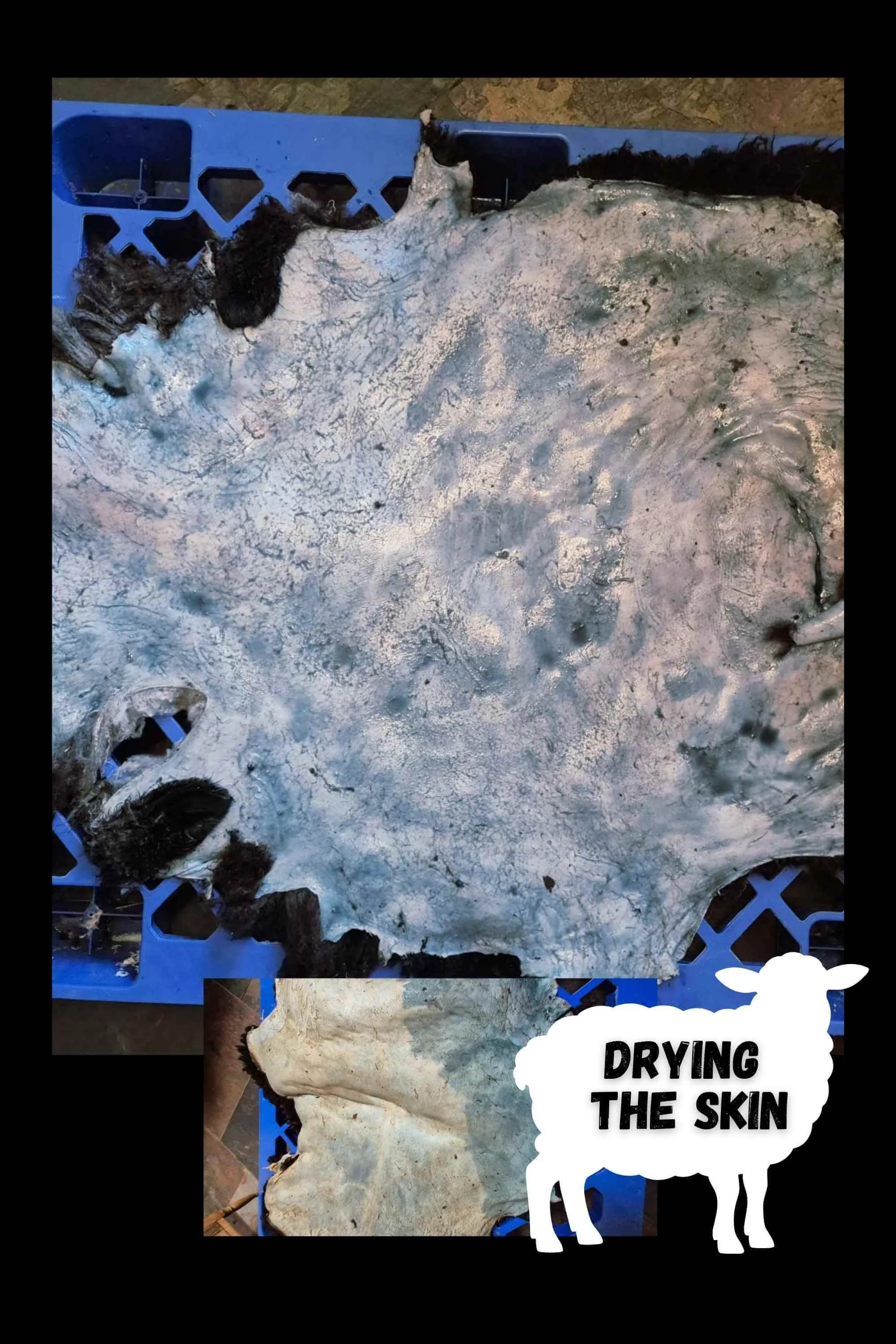
Step 12: Drying
Dry the hide flat on a pallet until both the wool and the flesh side are completely dry.
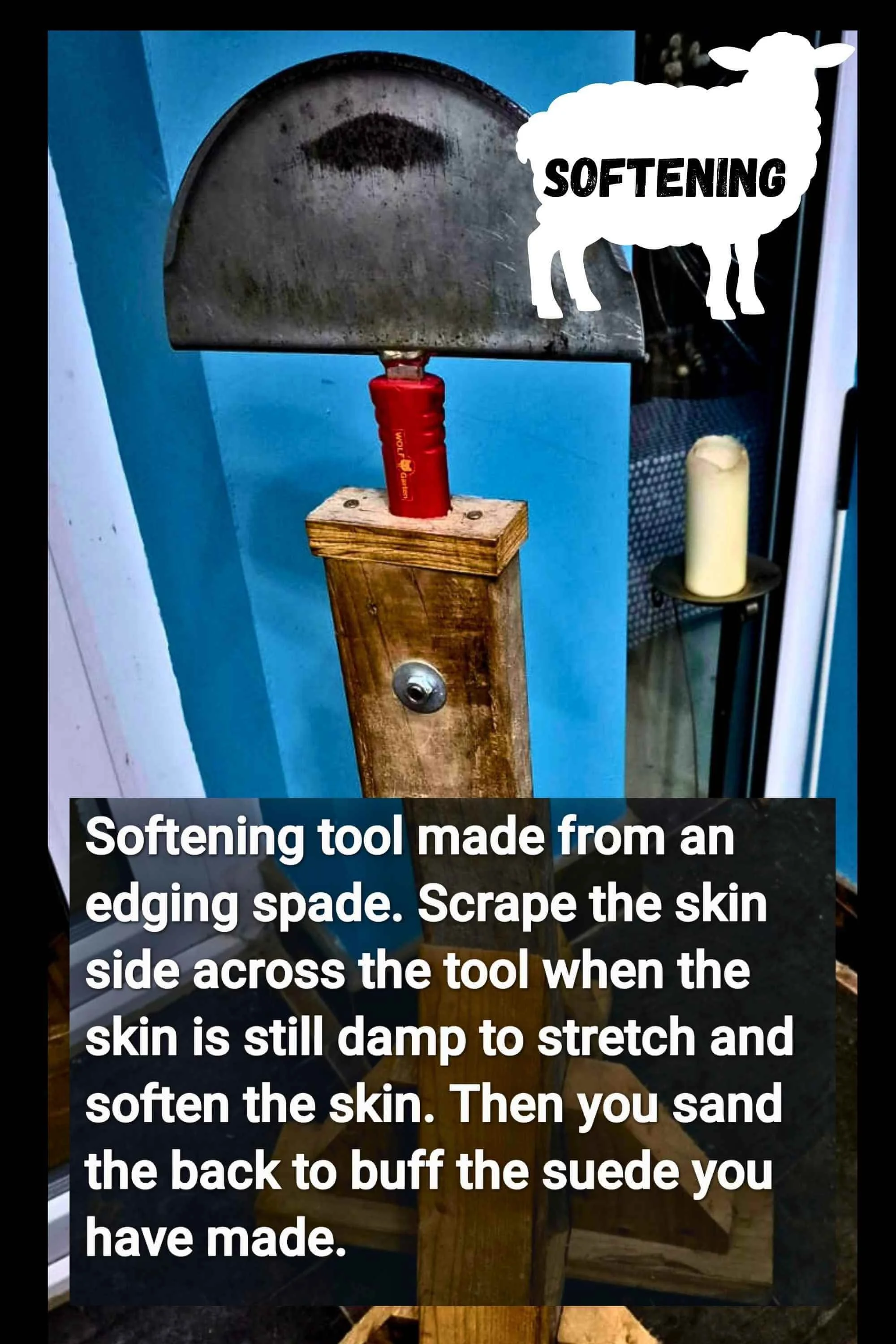
Step 13: Softening the Hide
Once dry, the sheepskin will be stiff. To soften it, rub and stretch the hide by hand, pulling it in all directions. I use a round-edged spade to work the skin side until it softens.
Step 14: Buffing
Sand the back of the skin, either by hand or using a sander.
You are very unlikely to achieve the butter-soft finish of a commercial tannery, but you can produce a flexible, soft, and usable sheepskin.
Step 15: Cutting and Shaping
Once the hide is completely dry and finished, cut and shape it as needed.
Tips & Warnings
* Be patient — tanning is a time-consuming process and can take days or weeks
*Always wear gloves when handling tanning chemicals
*Reheat chemicals when reusing them
*Any utensils used (such as pans for heating solutions) should never be used for food again
*Tanning sheepskin can produce strong odours, so it’s best done outdoors or in a well-ventilated space
Why our Mobile Livestock Home Kill Service Makes Hide Tanning Possible
With our home kill service, the skin is taken off straight away and can be salted within minutes — a critical step in preventing wool slip and spoilage. The hide remains clean, intact, and fresh, which is essential for successful small-scale tanning.
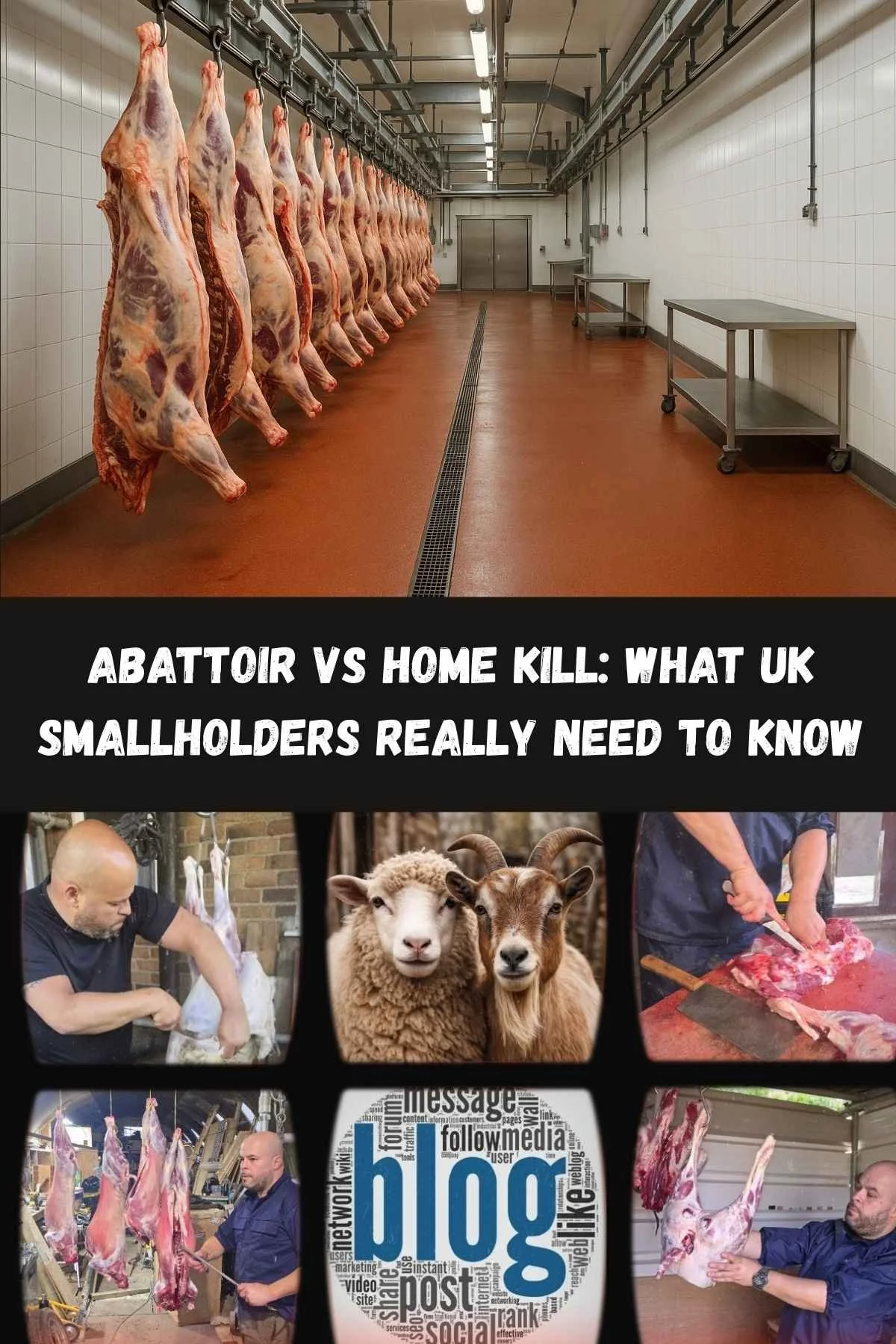
When animals are sent elsewhere, hides are often delayed, contaminated, or damaged before they can be preserved, making home tanning difficult or impossible. Please consider reading our Blog on Abattoirs vs Home Kill.
Home kill allows smallholders to:
Preserve the hide at exactly the right moment
Use traditional, low-impact methods
Retain full control over the process
Ensure nothing from the animal is wasted
For smallholders like Sue, home kill isn’t just about meat — it makes it possible to honour the whole animal, turning what could be lost into something useful, long-lasting, and meaningful.
If you are wondering whether your own sheep are ready for home kill, check our post on when are your sheep or goats ready for home Kill.
A Smallholding Mindset
What stands out most about Sue and John’s approach isn’t any single technique — it’s the mindset behind it all.
Everything has value.
Everything has a purpose.
And every decision is made with care for animals, people, and wildlife.
This is what ethical smallholding looks like in practice — not just producing food, but honouring the whole animal and the whole ecosystem around it.
For many smallholders, home kill isn’t only about convenience — it’s about values.
It allows:
Immediate care of meat, fat, and hides
Traditional skills like hide tanning to remain possible
By-products to be used responsibly for dogs and wildlife
A calm, familiar environment for livestock
Complete respect for the animal from start to finish
For those who believe in thoughtful, ethical food production, home kill supports a way of life where every part of the animal has value and nothing is wasted.
FAQs
Can you tan sheep hides at home?
Yes. With immediate care, salting, and patience, sheep hides can be successfully tanned at home using traditional methods.
Why does home kill matter for hide tanning?
Home kill allows the hide to be removed and salted immediately, which is essential to prevent spoilage and wool slip.
If you have any further questions please do not hesitate to contact us, or take a look at our FAQ Page
I
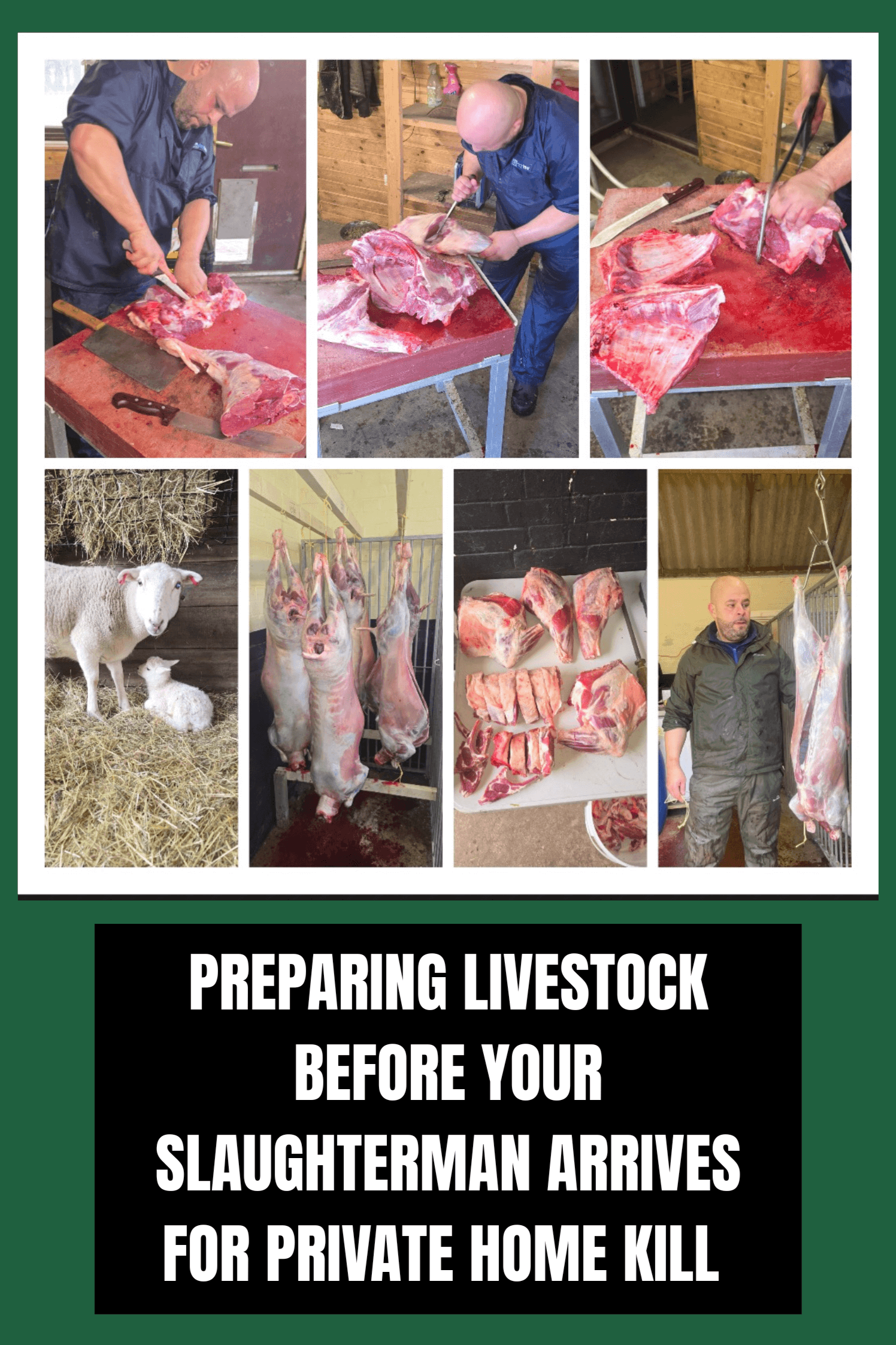

In this guide we’ll look at how pig home slaughter works on a smallholding, when pigs are typically ready, some of the breeds commonly kept by smallholders, and how much meat you might expect from a finished pig.
If you keep pigs on a smallholding, there usually comes a point where you start thinking about what happens when the time comes.
Many smallholders raise pigs for meat and want the final stage to be carried out calmly and respectfully in familiar surroundings. For some, home slaughter can provide an alternative to transporting animals to an abattoir.